Blog

Satellite Imagery vs Aerial Photography
2026-11-16
~ 7 min
(Article updated: 2026-11-16)
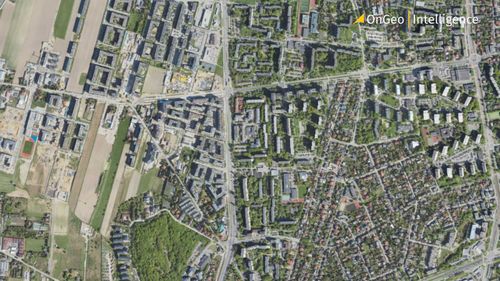
What Is Aerial Photography? Aerial photography involves taking images of the Earth’s surface from aircraft, drones, or other flying platforms. These photos are captured using high-resolution cameras or sensors, usually from a few hundred meters to several kilometers above the ground. Because aerial images are taken from lower altitudes than satellites, they capture much finer detail - you can see individual buildings, vehicles, and even small terrain features.
Read more
Why Cloud Masking Matters: Enhancing Satellite Imagery Accuracy with Smart Algorithms
2026-11-16
~ 4 min
(Article updated: 2026-11-16)
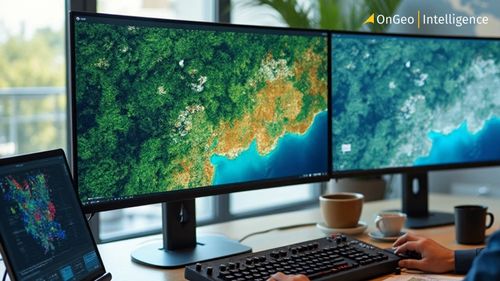
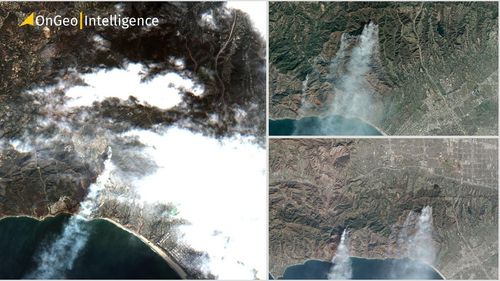
Cloud masking is essential for making satellite imagery reliable. Clouds and their shadows can obscure vital details in agriculture, urban planning, and environmental monitoring. This article explores how modern techniques—from image mosaicking to AI-driven models like KappaMask—help remove visual noise and ensure accurate, real-time Earth observation.
Read more
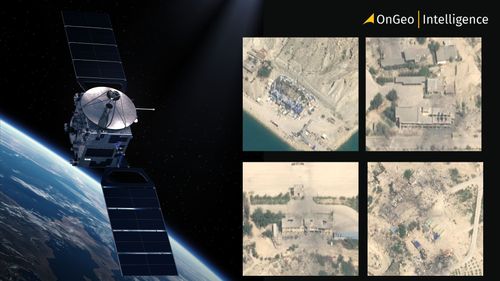
Beyond the Blackout What Satellites Reveal Behind Iran's Information Shield
2026-11-16
~ 6 min
(Article updated: 2026-11-16)
The Silent Witness Modern satellite constellations from the high-revisit cadences of Planet Labs to the sub-meter precision of Maxar operate beyond the reach of terrestrial censorship. They provide a persistent, objective ledger of physical reality. While state television may offer silence or denial, the infrared and optical sensors in orbit capture the undeniable: Thermal signatures revealing the activation of underground facilities.
Read more
The Cold War’s Silent Sentinel: How JUMPSEAT Redefined Space Intelligence
2026-11-16
~ 4 min
(Article updated: 2026-11-16)
Between 1971 and 1987, the United States launched eight highly classified JUMPSEAT satellites from Vandenberg. Developed by the NRO’s Program A, these were America’s first-generation signals intelligence (SIGINT) satellites operating in Molniya-type Highly Elliptical Orbit (HEO). Instead of imaging, JUMPSEAT collected electronic emissions, communications intelligence (COMINT), and foreign instrumentation signals (FISINT) from Soviet weapon systems.
Read more
List of Earth observation satellites and their optical imaging parameters
2026-11-16
~ 7 min
(Article updated: 2026-11-16)
Optical Imaging Parameters To fully understand the specifications of individual satellites, we should familiarize ourselves with their key technical parameters, which significantly impact the quality and application of satellite data. Spatial Resolution – This parameter defines the smallest object that can be identified in a satellite image. The lower the value (e.g., 0.5 m), the higher the image quality and the greater the level of detail.
Read more